DeJob 3.0 in Lviv brought together a surprisingly mixed crowd. Students, early-stage professionals, people already experimenting with their own tools, and even a few experienced specialists in Web3.
Some came out of pure curiosity. Others were much more intentional.
One small but telling moment was a father attending with his son, still in school, just to introduce him to the space early. At the same time, there were people already building, experimenting with AI tools like Claude, trying out “vibe coding,” and figuring things out on their own.
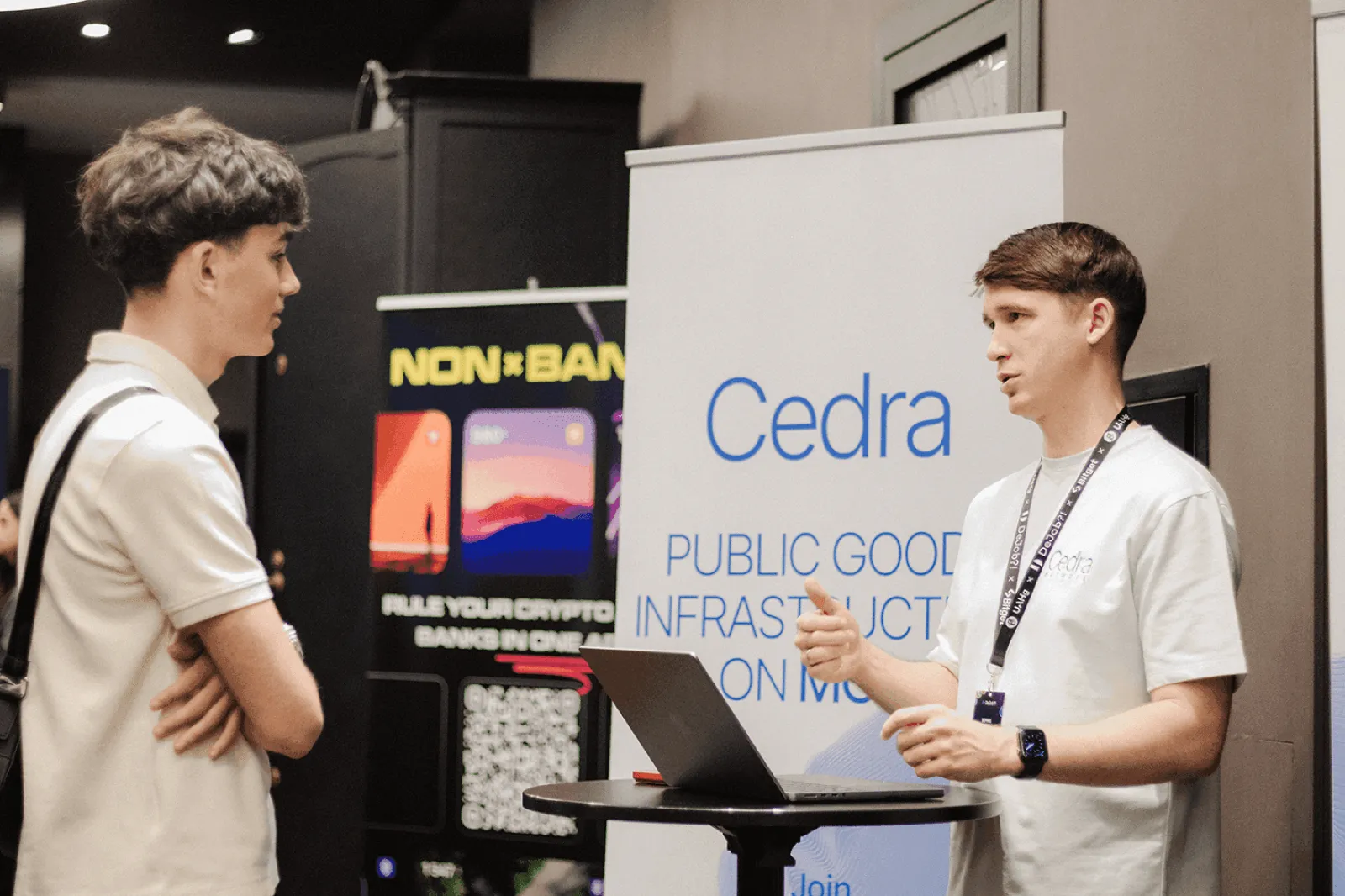
Cedra contributors were part of the event not only as speakers, but as a constant point of interaction throughout the day. Conversations didn’t really follow just the schedule. People approached between talks, during sessions, whenever they had a question or simply wanted to understand where they fit.
“Don’t Look for a Job. Create One.”
Borys Holub’s talk set a clear direction.
The core idea was simple: instead of focusing on finding a job in Web3, think about creating value first and building something of your own.
That idea was backed by a very practical perspective. The market is expanding, with tens of thousands of opportunities emerging, especially in areas like marketing and support, not just development.
Another point that stood out was the emphasis on action over theory. One real project matters more than multiple courses, and real experience compounds much faster than passive learning.
Most people were trying to understand how to get involved in a practical way, ideally as soon as possible. They were asking about teams, roles, internships, or any form of entry point that would allow them to start contributing.
There was a clear sense of urgency. Not necessarily to launch something from scratch, but to become part of an existing structure where they could learn and earn at the same time.
Explaining Cedra
One question kept repeating:
“How are you different from other chains?”
Answering it is not difficult, but making it immediately clear is.
The explanation usually starts with ideas like public goods, open protocols, and community-driven ecosystems. It goes further into how Cedra approaches infrastructure on Move, focusing on long-term value, collaboration, and support for contributors.
But for many people, especially those new to the space, this doesn’t instantly translate into something concrete.
What seems to resonate more are simpler, more direct ideas. That you can start today. That contribution matters. That you don’t need to fit into a predefined role to be useful.
The more practical the framing, the easier it is for people to connect the dots.
To sum up
DeJob 3.0 in Lviv showed a very specific stage of the market.
There is strong interest but also a need for clarity. People are willing to invest time and effort, but they are still figuring out where exactly to direct it.
For Cedra contributors, this makes the role more than just presenting ideas. It’s about translating a broader vision into something people can realistically act on.
And the closer that translation gets to real, tangible steps, the faster people move from interest to participation.
Contribute to Cedra ecosystem: https://linktr.ee/cedranetwork